Are you outgrowing your current place and wondering where in Valencia your family will thrive next? You are not alone. Many move-up buyers look to Valencia for more space, reliable schools, parks, and a calmer daily routine without losing access to greater Los Angeles. In this guide, you will learn how the main neighborhood types compare, what to check for schools and commutes, and how HOA and Mello‑Roos affect your budget so you can choose with confidence. Let’s dive in.
Valencia at a glance
Valencia is a master-planned part of the Santa Clarita Valley in northern Los Angeles County. It offers a network of parks, trails, and shopping areas, including the Westfield Valencia Town Center. You will find both flat-plateau villages and hillside enclaves, plus nearby pockets in Stevenson Ranch, Saugus, Newhall, and Castaic that many buyers include in their search.
Homes range from 1970s classics to newer infill and small-lot builds from the last 10–20 years. Lot sizes vary from smaller suburban yards to larger hillside properties. As you compare areas, think in terms of neighborhood types rather than just zip codes. That frame makes it easier to match your family’s needs to daily life on the ground.
Neighborhood types that fit families
Master-planned village tracts
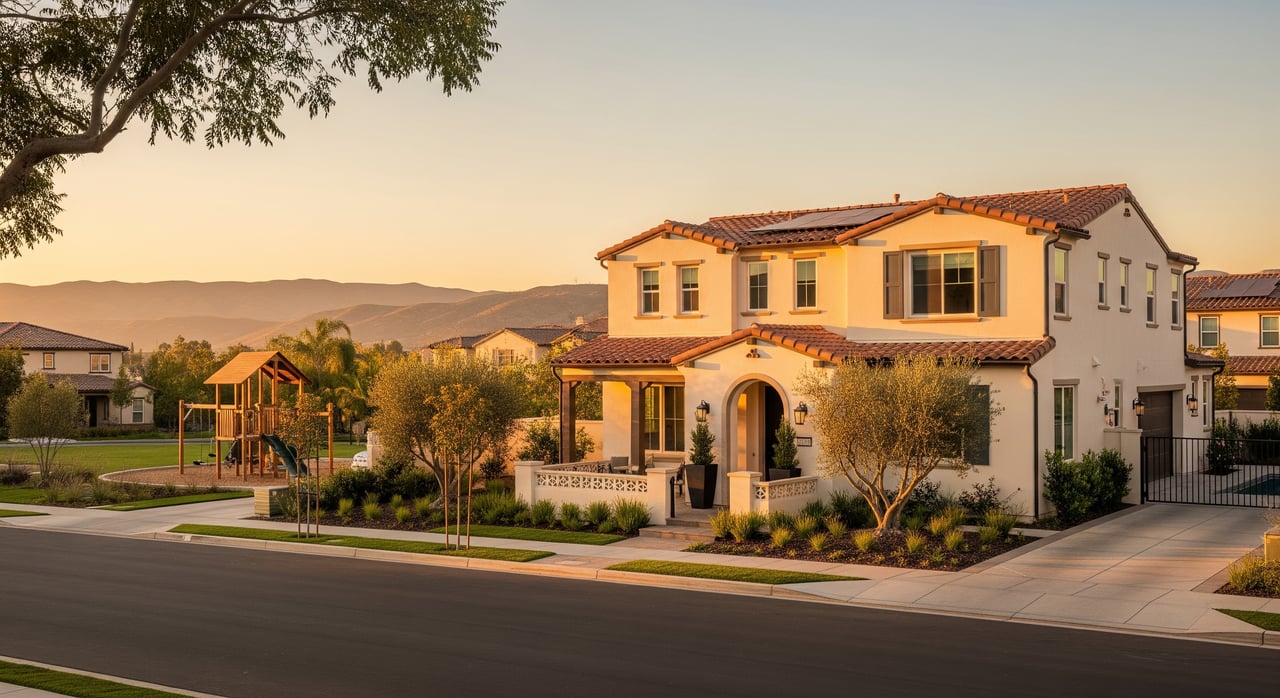
These are the heart of Valencia living. You will see sidewalks, nearby parks, community pools or centers, and short walks to elementary schools or small retail clusters. They tend to have consistent streetscapes and a strong neighborhood feel. If you want predictable amenities and places where kids can bike to a local park, start here.
What to weigh: walkability to school and parks, interior locations away from main arterials, and HOA-covered amenities that you will actually use.
Hillside and luxury enclaves
Hillside communities, such as Westridge, offer larger homes, view lots, and a quieter, more private setting. Streets can be steeper and sidewalks less common. These areas carry a higher price per square foot, and you will likely drive to most daily needs.
What to weigh: premium pricing, less walkability, and longer drives to retail balanced against lot size, privacy, and views.
Commuter-friendly pockets
Stevenson Ranch and select Saugus or Newhall neighborhoods position you closer to freeway access or Metrolink stations. You will find a mix of older single-family homes and townhomes, often at a lower price per square foot than premium Valencia tracts.
What to weigh: smaller yards or denser streetscapes in exchange for easier access to SR‑14, I‑5, and regional rail.
Townhomes and condos
Closer to retail and transit nodes, these neighborhoods keep maintenance low and offer smaller yards or patios. If you are balancing busy schedules, travel, or prefer a lock-and-leave feel, this can be a smart fit that keeps you near community amenities.
What to weigh: HOA services for exterior maintenance, parking and storage, and proximity to parks and schools.
Newer infill and small-lot homes
Many built in the last decade or two, these neighborhoods offer modern floor plans and HOA management. Yards tend to be smaller and some include Mello‑Roos financing, which shows up on your property tax bill.
What to weigh: newer infrastructure and amenities alongside higher carrying costs from HOA dues and Mello‑Roos.
Schools and enrollment checks
Most local high schools fall within the William S. Hart Union High School District, often called the Hart District. If high school pathways matter, start by reviewing district boundaries and programs through the Hart District. For test results and enrollment data, use the California Department of Education. Many families also review parent feedback on third-party sites like GreatSchools, then confirm with official sources.
Key tips as you search:
- Verify today’s assignment for a specific address. Boundaries can adjust as enrollment changes.
- Look at feeder patterns from elementary through Hart District high schools so you understand the path.
- Ask about capacity, specialty programs, and recent facility upgrades.
If your older children already attend a school, continuity may outweigh features like yard size. Build your short list around the actual school assignments for each address you are considering, then evaluate the homes in those areas.
Parks, trails, and daily life
Valencia emphasizes open space, multi-use trails, and neighborhood parks. Many villages center life around community fields, playgrounds, and pools. You will also find family programming and city-run activities throughout the year. To explore current offerings, visit the City of Santa Clarita for parks and recreation programs.
As you tour, notice the daily rhythm:
- Interior cul-de-sacs feel quieter, while homes near major streets experience more traffic.
- Some villages allow you to walk to schools and small retail. Others require a quick drive.
- Proximity to Westfield Valencia Town Center increases access to dining, movies, and events.
Commute reality and options
Santa Clarita Valley connects to greater Los Angeles via SR‑14 and I‑5. Commute times can vary widely and often double between off-peak and peak hours. If you work in the San Fernando Valley, Burbank, or downtown, create a realistic plan and test it during the times you care about.
Consider these options:
- For rail access, review schedules on Metrolink for the Antelope Valley Line.
- If you work locally or hybrid, Valencia’s quality-of-life benefits often outweigh longer regional commutes.
- If both adults commute, prioritize neighborhoods with quicker freeway or Metrolink access and accept tradeoffs like smaller lots.
HOA, Mello‑Roos, and taxes
Many Valencia neighborhoods have HOAs. Dues typically cover landscaping for common areas, pools or recreation centers, street lighting on private roads, and sometimes exterior maintenance for attached homes. Newer communities may also have Mello‑Roos Community Facilities District bonds that fund local infrastructure and are billed with property taxes.
How to verify carrying costs:
- Confirm current HOA dues and what they include by requesting the HOA packet.
- Review your most recent property tax bill for Mello‑Roos line items and levy amounts. Start with the Los Angeles County Treasurer and Tax Collector for property tax information.
- Compare monthly totals across homes. Higher dues or Mello‑Roos often correlate with newer infrastructure and more amenities.
Matching needs to neighborhoods
Use your priorities to filter the search efficiently:
- If you want schools and yard space: focus on master-planned villages near elementary schools and parks. Weigh lot size against interior street locations away from main roads.
- If commute comes first: look near freeway access or Metrolink stations in Stevenson Ranch and select Saugus or Newhall pockets. Expect smaller lots or townhomes.
- If low maintenance matters: consider townhome or condo areas where exterior maintenance is included in HOA dues.
- If you want privacy and views: hillside enclaves like Westridge offer larger lots and a luxury feel with a premium price and less walkability.
How to compare two addresses
Use this quick, apples-to-apples approach:
- Schools and programs
- Verify current school assignments through the Hart District and check state data via the California Department of Education.
- Confirm feeder paths from elementary through high school.
- Commute and transit
- Simulate peak-hour drives for both addresses.
- Check Metrolink schedules for the closest station and typical parking availability.
- Parks and daily routines
- Map the distance to parks, fields, and family programs via the City of Santa Clarita.
- Walk the streets around school arrival and evening hours to experience traffic and noise.
- HOA and Mello‑Roos
- Request the HOA budget and reserve study for dues coverage and health.
- Review the property tax bill and Mello‑Roos CFD line items via the County Treasurer and Tax Collector.
- Risk and insurance considerations
- Review regional fire resources at Cal Fire and ask about local mitigation efforts.
- Note hillside stability or flood considerations and budget for inspections.
A balanced way to decide
Finding the right fit is about tradeoffs. Top-rated elementary feeders may mean a longer commute. Larger lots often sit farther from retail. Higher HOA dues can deliver pools and maintained parks that your family will enjoy daily. The best choice aligns with your must-haves and your weekly routine, not just a zip code label.
If you are a service member, veteran, or first responder, you will find strong community ties across Santa Clarita. Share your goals and timing early so we can help you target neighborhoods that support your schedule, budget, and family life.
Ready to compare homes by school path, commute, and true monthly costs? Reach out to schedule a neighborhood consult with Alin Kazarian. We will walk through your priorities, preview on- and off-market options, and build a short list that fits your family today and five years from now.
FAQs
What should families know about Valencia schools?
- Start with the Hart District for high school boundaries and programs, then confirm elementary and middle assignments for each address and review state data on the California Department of Education.
How do HOA dues and Mello‑Roos affect my budget?
- HOA dues cover shared amenities and services, while Mello‑Roos appears as a separate line on your property tax bill; check the County Treasurer and Tax Collector and the HOA packet to compare total monthly costs across homes.
Are Valencia neighborhoods walkable to parks and activities?
- Many master-planned villages include parks, trails, and recreation centers; explore current programming and park locations on the City of Santa Clarita site and verify walk times from each address.
What commute options do Valencia residents use?
- Most commuters rely on SR‑14 and I‑5, with rail service on Metrolink; test peak-hour drives and train schedules for your specific destinations.
Which neighborhoods fit low-maintenance living?
- Townhome and condo pockets near retail and transit offer smaller yards and HOA-managed exteriors; compare dues, parking, storage, and proximity to schools and parks.
How can I check fire risk around a specific home?
- Review regional information from Cal Fire, ask about local mitigation and brush clearance, and budget for inspections during escrow to understand property-specific conditions.